Why Flail Mower Hammer Blades Wear Faster on Rocky Pasture Than on Clean Grass
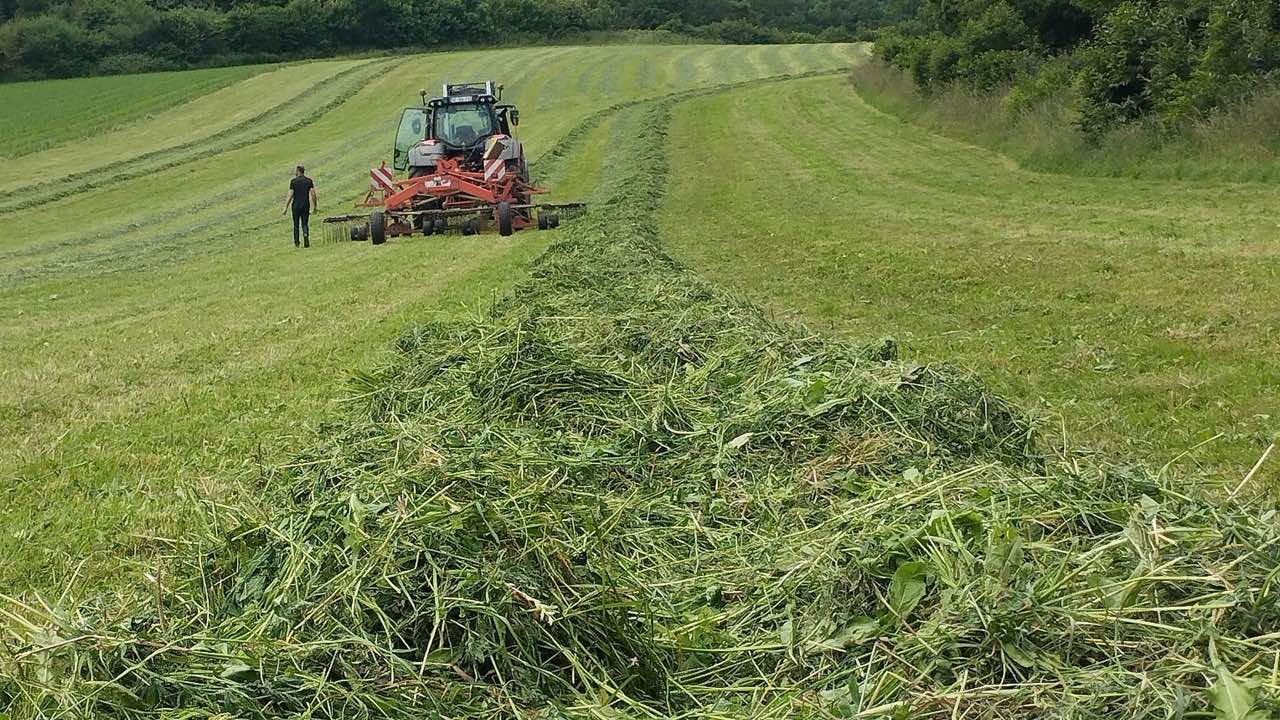
The same set of hammer blades that runs a full season on a clean hay field might need replacing two or three times on rocky hill pasture. This isn’t a quality problem or bad luck — it’s a predictable consequence of what hammer blades are actually doing when they encounter rock versus when they’re cutting grass. Understanding the difference changes how you approach blade selection, maintenance intervals, and the way you operate the machine in different field conditions.
What Actually Wears a Hammer Blade
On clean grass, a flail mower hammer blade wears primarily through abrasion. The blade tips contact soil, grit, and the abrasive silica in grass stems with each revolution. This is gradual, even wear that rounds the cutting edge slowly over hundreds of operating hours. The wear pattern is predictable: the leading edges and blade tips erode steadily, the blade gets lighter as material is lost, and performance degrades slowly enough that you have reasonable warning before the blades need attention.
On rocky pasture, the dominant wear mechanism is impact, not abrasion. Every stone contact — whether it’s a visible surface rock or a buried stone that the rotor clips at operating depth — delivers a sudden, high-energy shock to the blade tip and body. The damage from a single rock strike can equal what hundreds of hours of grass abrasion would produce. Carbide-tipped blades can chip. Plain steel blades can deform, crack, or lose sections of material. The damage is concentrated rather than gradual, which is why blade life on rocky ground can be a small fraction of what the same blades deliver on clean fields.
The Compounding Problem: Rotor Balance
When a hammer blade loses material suddenly — from a rock strike that chips a section or deforms the blade asymmetrically — it changes the rotor’s balance. Flail rotor balance matters because the rotor spins at high RPM with significant mass, and even small weight differences between opposing blades create vibration. That vibration loads the rotor shaft bearings, the gearbox, and the machine frame cyclically, accelerating wear in those components as well.
The implication is that a single significant rock strike doesn’t just damage the blade it hits. It creates a balance problem that begins stressing the rotor assembly until the blade is replaced or the rotor is rebalanced. On rocky ground where blade damage events happen more frequently, this cascading effect on rotor components is one of the more significant hidden costs of running blades too long between inspections.
The practical response is to increase blade inspection frequency on rocky operations, not just increase the replacement budget. Catching asymmetric damage early — before the balance problem has run for dozens of hours — limits secondary damage to rotor bearings and seals.
How Blade Design Affects Rocky Ground Performance
Not all hammer blade designs handle rock contact equally. The key variables are blade body material, blade thickness, and whether the blade uses a carbide tip.
Body material and thickness: Thicker blade bodies absorb rock impacts better than thin ones before deforming or cracking. Manganese steel alloys, which work-harden under impact, develop a harder surface layer as they’re struck — which improves resistance to subsequent impacts. This is why manganese alloy hammer blades are a common choice for rocky ground applications despite not having the initial hardness of higher-carbon steel grades.
Carbide tips: Carbide-tipped hammer blades hold cutting edge geometry significantly longer than plain steel blades in abrasive conditions. On clean grass, the extended edge life is the main benefit. On rocky ground, carbide tips introduce a trade-off: carbide is harder than steel but more brittle under sudden impact. A direct rock hit that a tough steel blade body would dent or deform can fracture a carbide tip. Operations with frequent, severe rock contact sometimes find that plain high-strength steel blades with good toughness outlast carbide-tipped blades in their specific conditions — even though the carbide tip would outperform on abrasive wear alone.
The right choice depends on the character of the rock contact in a specific operation. Occasional glancing contacts with small stones favor carbide tips. Frequent direct impacts with larger embedded rocks favor tough steel.
Operating Practices That Reduce Blade Wear on Rocky Ground
Mowing height has a direct effect on blade wear in rocky conditions. Running the rotor higher reduces the frequency of contact with embedded and surface stones, at the cost of leaving some material uncut at the base. For maintenance mowing applications where a precise cut height is less critical, raising the cutting height is one of the simplest ways to extend blade life on rocky pasture.
Ground speed also matters. Slower ground speed reduces the impact energy of rock contacts by giving the blade more time to deflect rather than taking a full-energy hit. This is counterintuitive to operators accustomed to maximizing ground speed for productivity, but on very rocky terrain the productivity gain from faster ground speed is often offset by more frequent blade changes and rotor maintenance.
Forward overlap on passes — the distance between adjacent swaths — affects how often the rotor edge encounters material that wasn’t pre-cut on a previous pass. On rocky sections, some operators prefer a slight overlap pattern that keeps the outer rotor zone working pre-cut material rather than encountering fresh ground on every pass, which reduces edge blade contact with undisturbed rock.
Setting Realistic Replacement Intervals
The fundamental mistake in rocky pasture operations is applying a fixed hour-based replacement interval derived from easier operating conditions. An interval that’s appropriate for a clean hay operation leaves blades far too long in a rocky pasture context.
A more reliable approach is inspection-based: pulling the rotor cover at regular intervals — after every few operating days at minimum — and checking each blade for deformation, cracking, missing sections, and asymmetric wear. Any blade showing visible deformation or a missing section comes off immediately. Blades showing significant weight loss from abrasion that’s noticeably asymmetric between the left and right rotor halves get replaced as a set on that half.
The cost of this inspection discipline is time. The alternative is the cost of an unplanned rotor bearing replacement from running a damaged rotor too long — which is consistently more expensive.